

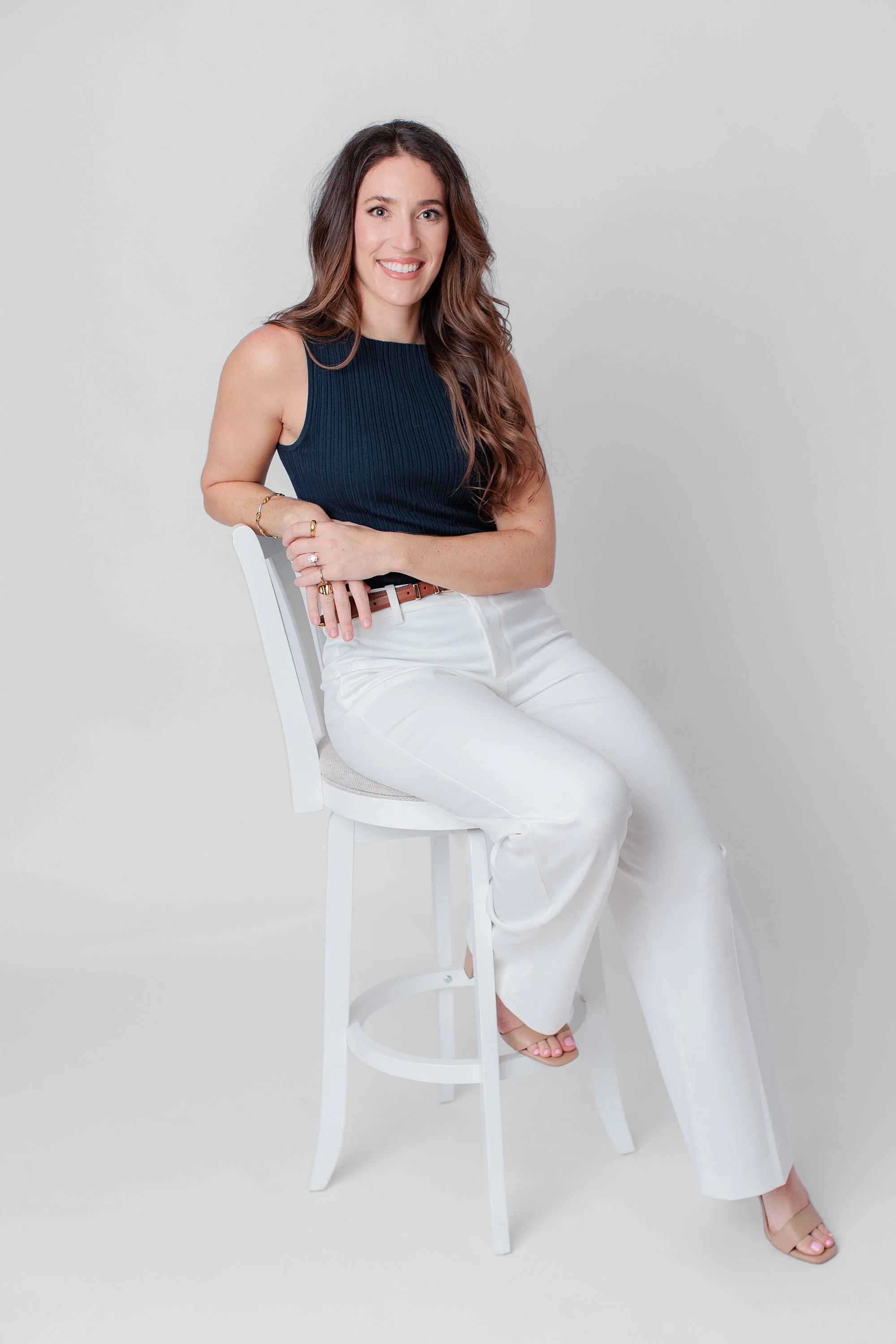
When Sarah Ritter and I started planning her OptiMind branding session, her website needed more variety in its photography. She wanted people to get a better sense of her work, and her marketing team needed images they could use throughout the site without reaching for the same portraits or generic stock photos.
Sarah helps teens and adults turn their goals and intentions into everyday action through executive function coaching. Much of that work happens virtually, which gave us an interesting question to work through: how could we help someone picture the experience of working with her?
That became the starting point for our session at my Silver Spring studio. If you’re looking for branding photoshoot ideas for your own business, Sarah’s planning process is a good example of how much you can draw from the work you already do.

Where do good branding photoshoot ideas come from?
Start with what your clients need to understand about your business and where you’ll use the photographs. That gives you a reason for each kind of image, whether it’s a welcoming portrait, a glimpse of your process or a close-up that supports a page on your website.
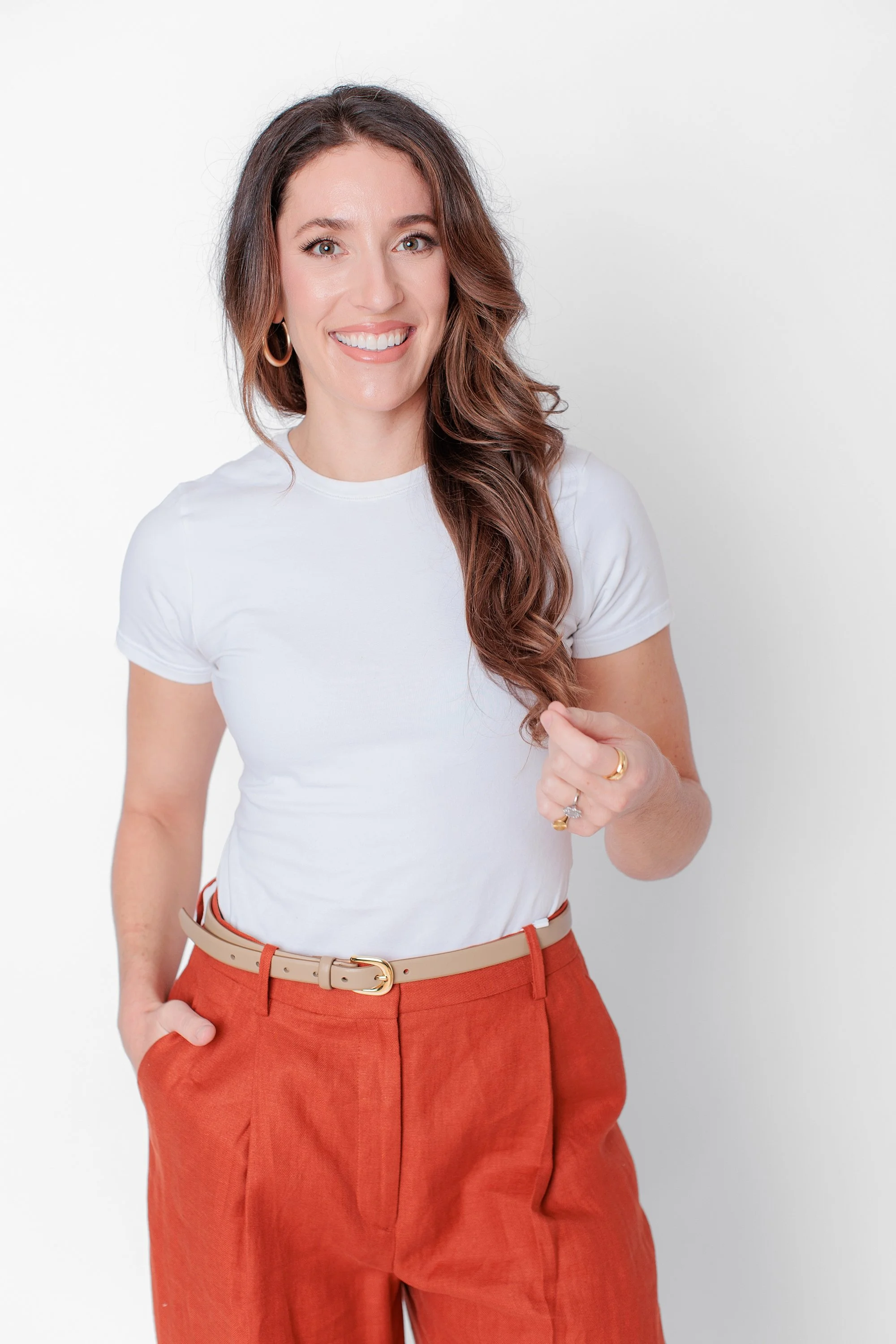
For Sarah, we needed to introduce the person behind OptiMind while helping visitors understand her approach. Her work involves listening, teaching, recognizing patterns and developing practical systems with clients. A headshot could introduce her, but we wanted the rest of the photography to help tell that story too.

Getting to know the business before planning the photos
In her questionnaire, Sarah explained that prospective clients often want to know how practical the coaching will be. Will they be working through day-to-day challenges? How will accountability fit in? What does the support actually look like?
Those questions helped shape the creative guide. We planned around three themes: getting to know Sarah, looking inside the coaching process and finding ways to illustrate the ideas behind her work.
She also described the feeling she wanted people to get from OptiMind as “approachable expertise.” That gave us something useful to come back to when considering everything from expressions to wardrobe. The photos needed to feel welcoming while reflecting how seriously she takes her work.

Showing work that usually happens on a screen
For someone who works virtually, it’s easy to assume the only option is a photo sitting at a laptop. That can be useful, but there’s usually more to work with once we look at what happens during those calls.
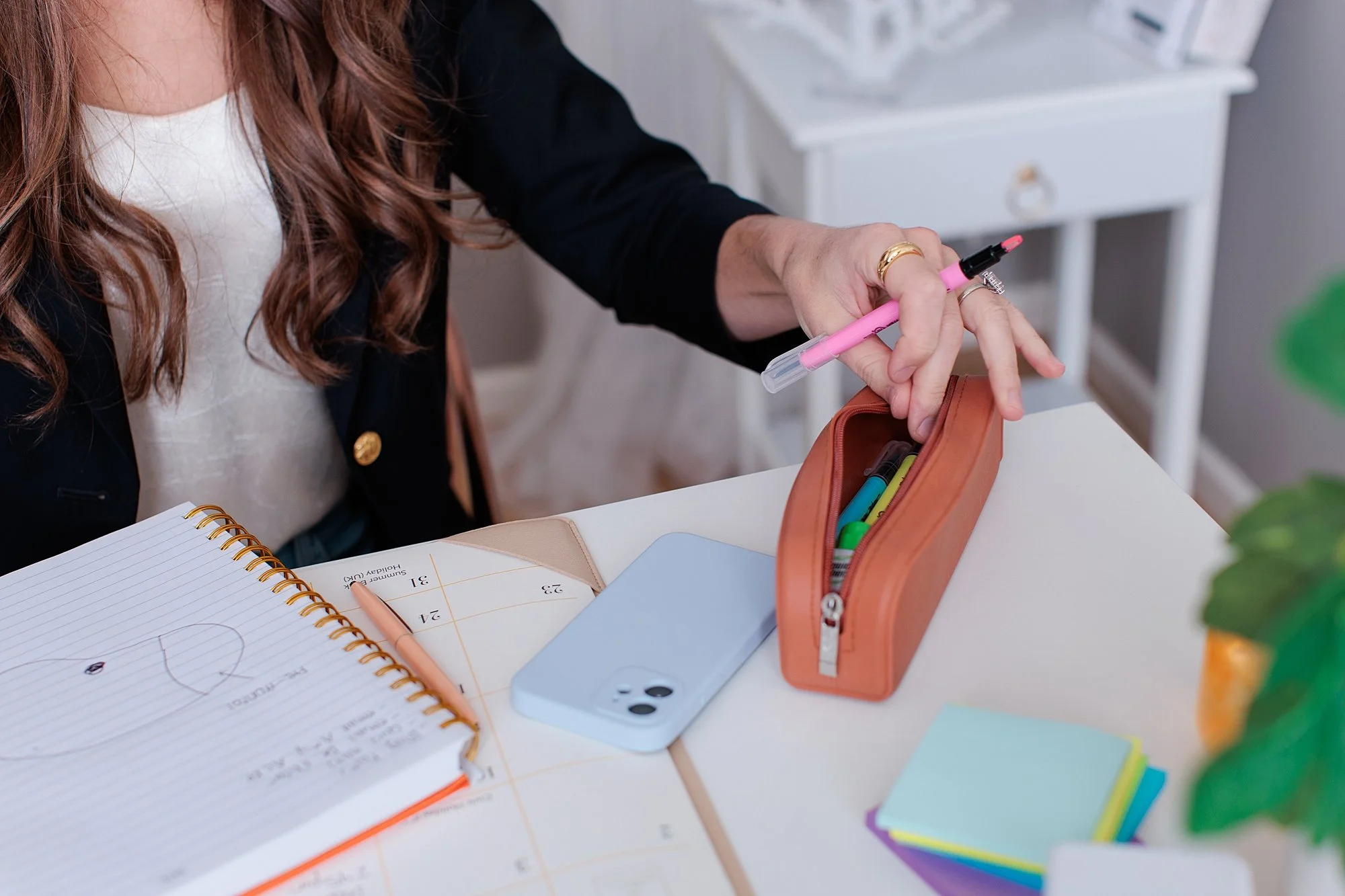
Sarah uses a dry erase board, lesson visuals, planning documents and digital tools in her coaching. Those gave us ways to plan photographs around teaching, listening and working through a problem, without needing real clients to take part.
The creative guide included ideas such as reviewing a planning document, explaining something at the board and using materials to demonstrate a concept. Each gave us a way to show part of the work that a visitor might otherwise have trouble picturing.
If your business is built around your knowledge, this is a helpful place to start. Think about what you explain, what you reach for during a meeting and what you help someone work through. There may be more to photograph than you realize.
Choosing props that belong in the story
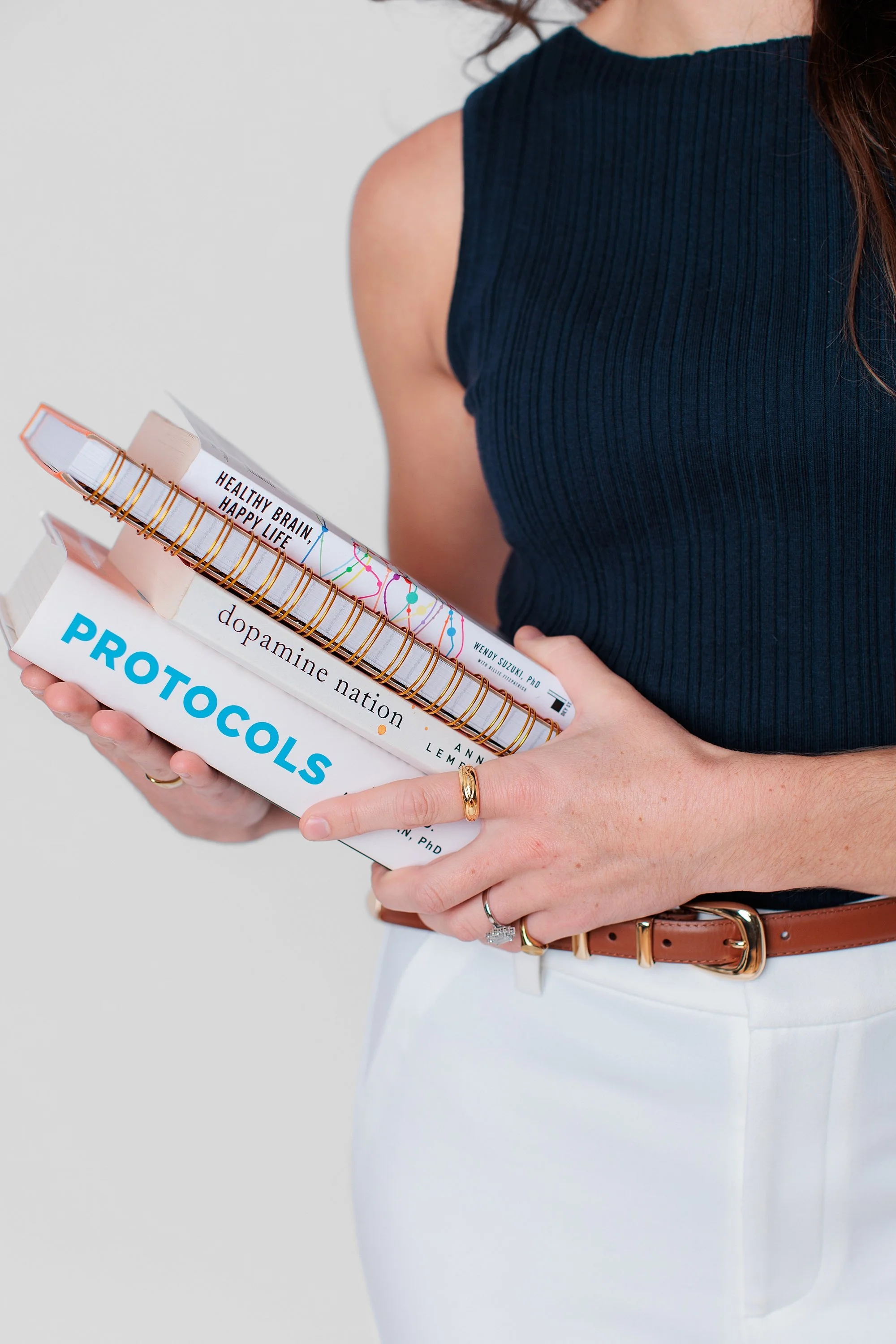
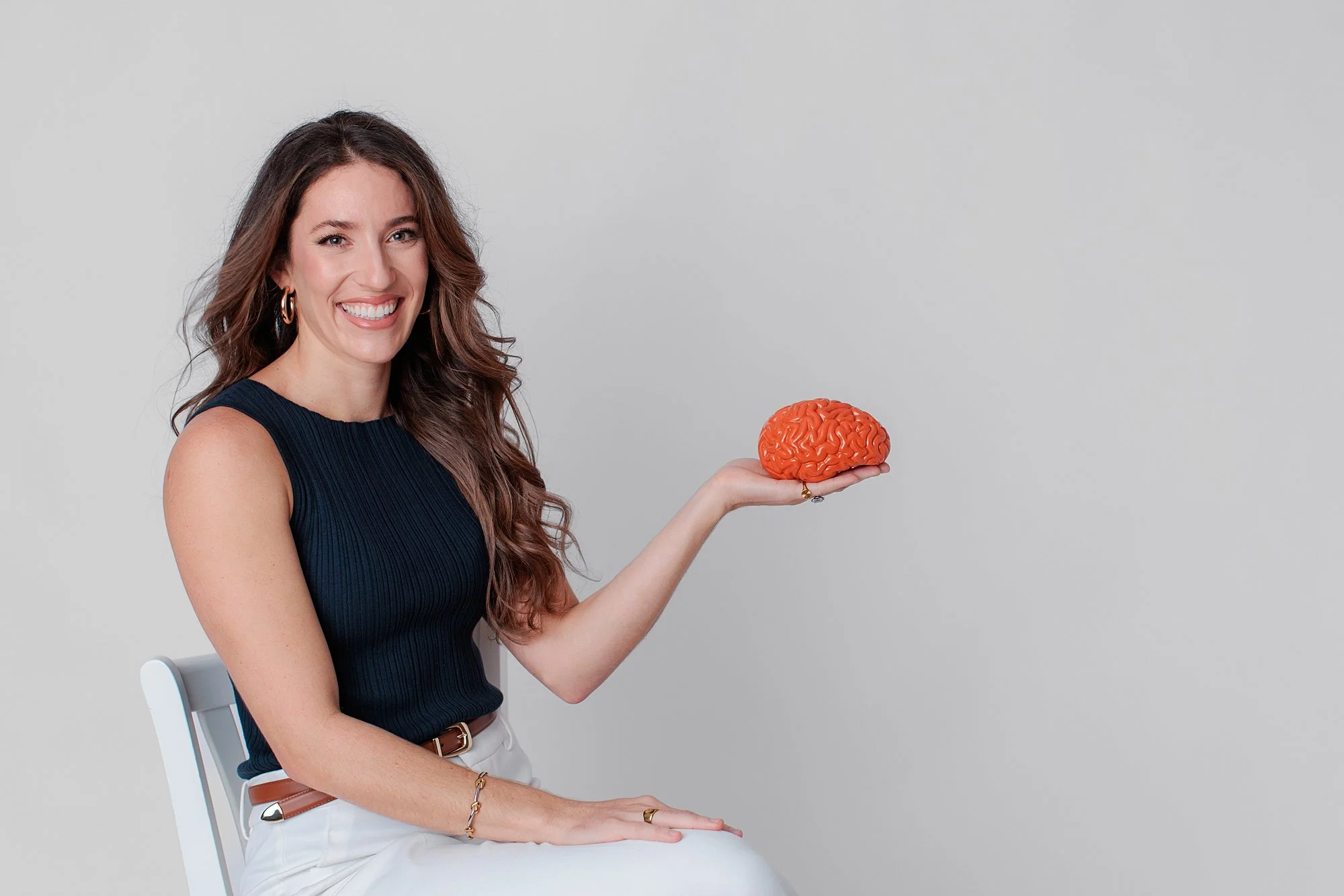
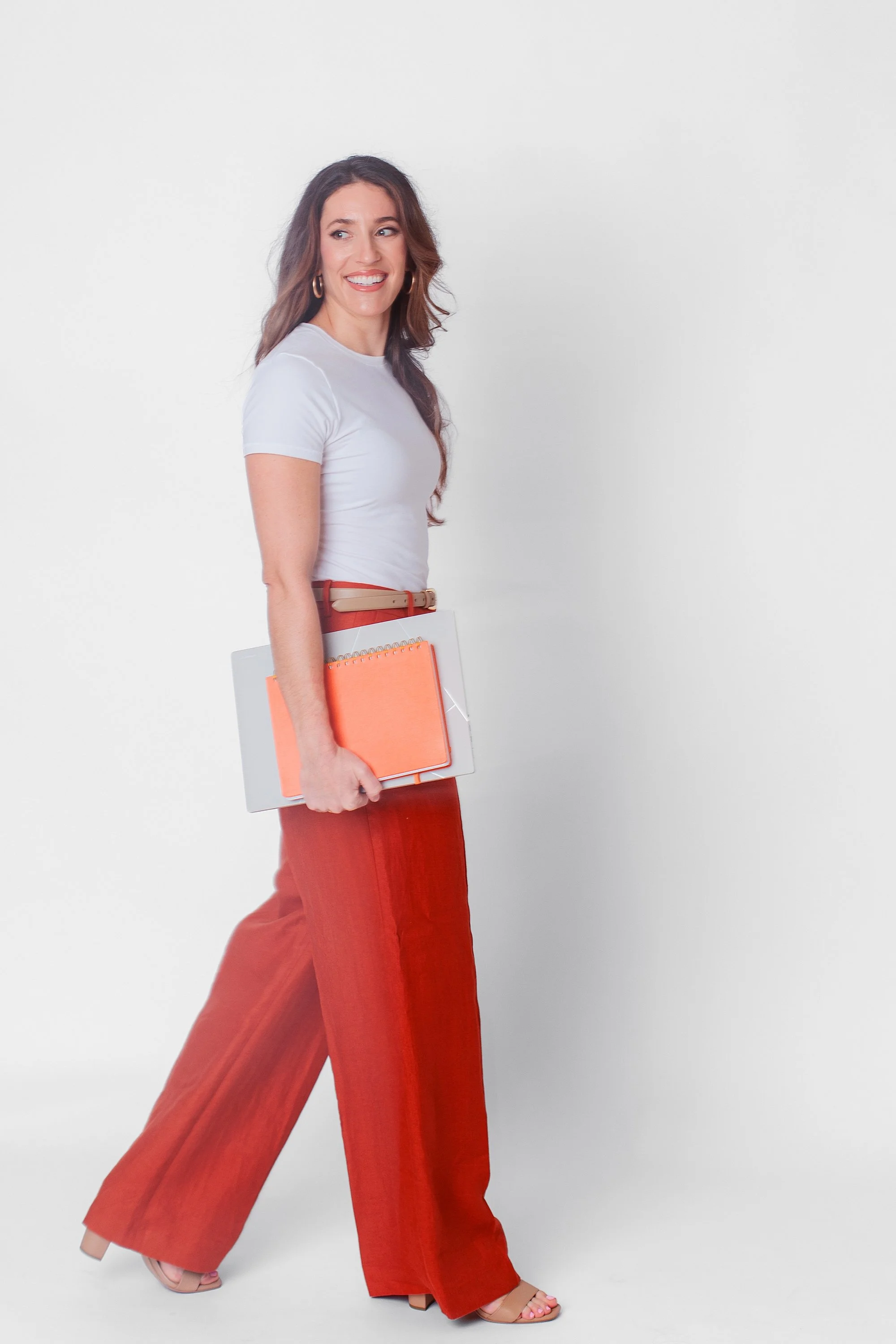
Sarah already had several items in OptiMind’s orange brand color, including a clock, a notebook and a small brain model. Along with her teaching materials, they gave us a starting point for bringing the business into the photographs.
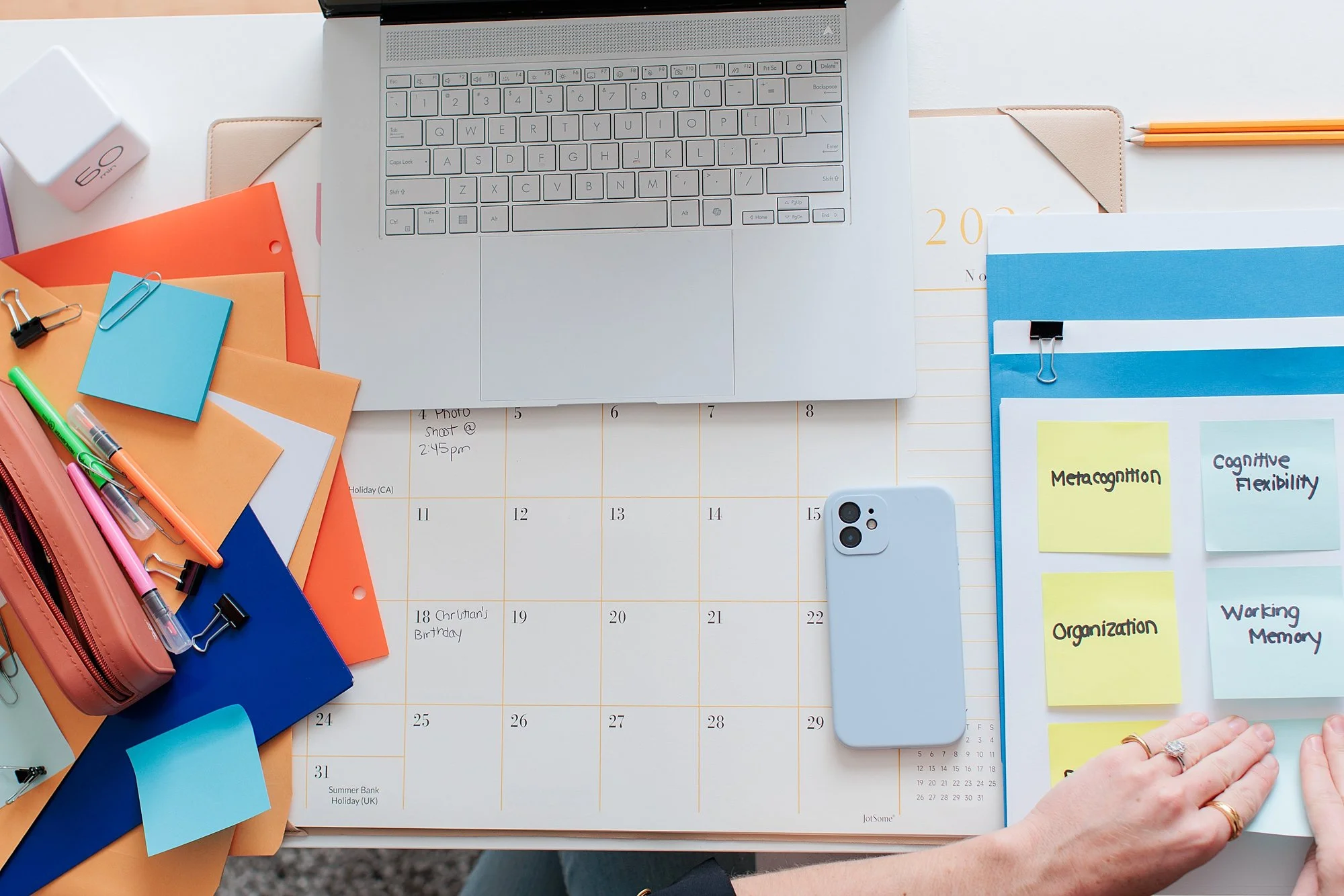
I like when props have a reason to be there. Something you use regularly can give your hands a job while also helping the image feel specific to your work. For Sarah, a planning document or teaching tool could do both.
We also considered ways to illustrate ideas that are harder to photograph directly, such as organizing scattered thoughts or working out the steps between an intention and an action. Sticky notes, cards and paper gave us room to explore those concepts in a simple, visual way.
Planning photos for the places they need to go
One of the clearest requests from Sarah’s marketing team was for wider photographs with room for website text. They needed space for headlines, buttons and other content, which meant we had to think about composition before taking the photos.
A portrait can be lovely on its own and still be difficult to use in a website banner if there’s nowhere for the headline to sit.
We also planned close-ups and detail images that wouldn’t always need to show Sarah’s face. Hands writing, materials on a desk and teaching tools could give the team options for blog posts, newsletters and service pages. The idea was to build a collection that felt like OptiMind and could be used in different ways as the website developed.
If you have a designer or marketing team, their input can be helpful before your session. Knowing what they keep wishing they had gives us something concrete to plan for.
Having a plan without needing to direct your own shoot
You don’t need to arrive with all of these ideas figured out. Sarah’s questionnaire gave me the background I needed to develop the creative guide, organize the themes and recommend wardrobe and props.
That preparation gives us a shared starting point. You can see what I’m thinking, tell me what feels right for your business and ask questions before we’re in the studio trying to make those decisions.
I also have some behind-the-scenes video from Sarah’s session to share alongside the photographs. It gives you a look at the shoot and how the setups come together.

Branding photography in Silver Spring and across the DMV
My studio is based in Silver Spring, Maryland, and I offer on-location branding sessions throughout Washington, DC, Montgomery County and Northern Virginia. We can choose a setting based on your business, the photographs you need and how you plan to use them.
If you only need an updated portrait for your profile or bio, a headshot session may be a good fit. If you’re regularly searching for images to use across your website and marketing, we can talk about building a broader collection through a branding session.
You can learn more about Sarah’s work at OptiMind. And if her session has you thinking about what you’d like to show in your own business, I’d love to hear about it. Tell me what you do and where your current photos are falling short, and we’ll start working out a plan together.