6 Tips on How to Pose in Photos
Let's be honest- we are all trying to look our best in photos. Especially in the world of social media when we see a lot more of each other! Here are a few quick tips for women on how to easily look their best!
TIP 1: Stand a quarter turn away from camera
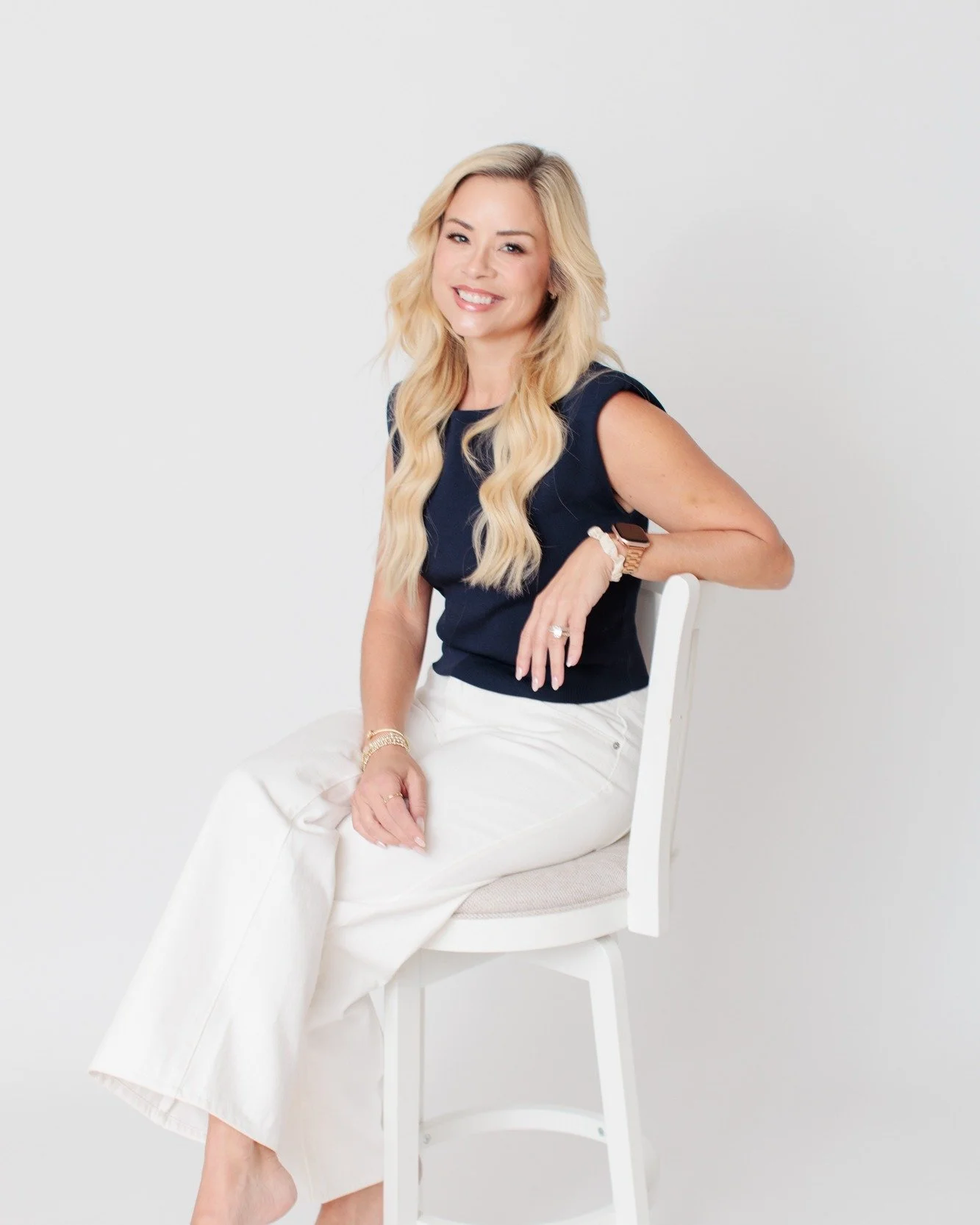
Think about your feet. Try not to have both your feet facing forward toward to the camera with your weight equally distributed, but instead turn your body a quarter turn away. You show your widest when facing the camera, but a slimmer sliver if you turn slightly!
TIP 2: Pop your front leg
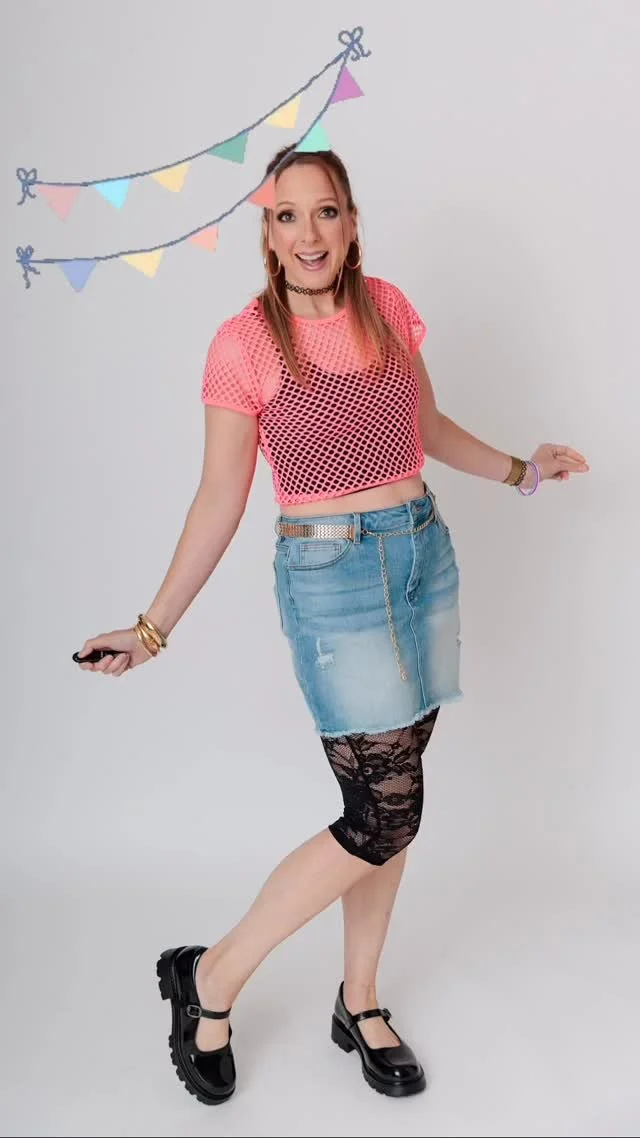
Place the weight on your back leg and bend your front leg- this gives a nice feminine curve and lengthens your body.
TIP 3: Create negative space with your arm
If your arm is straight against your body, it makes your body look wider then it really is. By putting your hand on your hip, leaning it on someone/something- anything to get it away from your body, it creates space and shows the difference between your body and your arm!
TIP 4: Twist and Lean In
Twisting your torso and leaning slightly toward the camera creates a cinched waist and lengths your neck and chin- all very flattering things!
Tip 5: Tippy Toes
If you're not wearing heels, pop up on your toes. It lengthens your whole body and gives you great posture!
TIP 6: Shoot from above
If given the choice, always shoot from slightly above instead of slightly below. This lengthens the neck and jaw and tames those double chins and harsh lines! Give a slight tilt to your head - this makes you look more relaxed and natural!
So there you have it! 6 easy ways to instantly change the game of your photos! A pretty dramatic before and after with just a few simple tricks of the trade! (and now you'll see me doing it every photo!!)
BEFORE AFTER
Using your Camera: Classes and Resources
You have your camera- great! Now how do I learn how to use it?
There are some great online classes and resources that I check out regularly:
- Creative Live
- Lynda.com (most libraries offer free online access!)
- Digital Photography School
For the Washington DC area, there are some great local classes:
- I love Washington Photo Safari because it's combining photography and seeing DC!
- Capital Photography Center has some great classes as well!
- Smithsonian Associates also offers some photography classes!
I also teach personal classes either as an individual or for a small group! Contact me for more info and pricing!
Buying a Camera: What's Right for You?
Okay – so you’ve thought through these questions. Now what? Here are some tips based on some common answers!
I just want good photos, keep it simple and easy
You aren’t looking to go pro or even worry about all the manual controls, you just want a step up from your phone and something that can capture images quickly and not weigh you down. Here are few ideas of some basic point and shoot cameras at various levels and price points!
Look out for sensor size (the larger the better) and whether it’s not it’s important to incorporate things like video, wifi connection, ruggedness, etc.
I want some room to grow and learn
An entry level DSLR is a great place to start. Canon and Nikon have always been and will continue to be the leaders in the industry. I would strongly recommend picking one of the other!
A DSLR allows you to switch out lenses and take full manual control of your camera. You can also fall back on the automatic mode when necessary, but there is room to grow and learn. Higher price points will afford you better performance in low light, faster shooting speeds, more focus points and greater control.
Most cameras include a "kit lens.” These are not going to be your top of the line lenses, but they are a good starting point to learn more about your camera and then determine what you’re missing and how you want to invest in lenses. I want to zoom closer, or a greater “depth of field” (that blurry background), etc.
It will give you a chance to learn the limitations of your camera vs the lens.
Here are some good starter DSLR’s!
I want to travel light but still have control
irrorless cameras have really come into their own across the past few years. They afford you the manual control of a DSLR, the ability to interchange lenses, but with a much smaller body size. I bought my first one last year and have been pleasantly surprised with what it can do! I took it to Italy and was very happy with my photos!
But do not be fooled that this is a cheaper option. The bodies will still cost you and those additional lenses are another set of expenses that do not interchange with a DSLR.
This is also where Canon/Nikon have not led the market. Right now Sony and Fuji are the market leaders with some the best mirrorless systems out there. Here are two good ones to look at! (I own the Fuji)
I’m ready to move to the big time
ou know you want something robust and are ready to really invest in some solid, professional gear. (yah!!) Here are some big boys to get you going. The kit lens is still a safe place to start as you begin to build your library of lenses based on your needs!
Canon 5D Mark IV- the latest and greatest from Canon. I will admit to be drooling over this one just a little!
Canon 5D Mark III- my work horse- I own 2 of these guys and I love them so much!
Canon 6D- this is my backup/travel version. I can still use all the same lenses as my Mark III, but it’s just a little bit more lightweight and simpler for everyday use.
Canon 7D- a bit cheaper, just keep in mind this has a cropped sensor (vs full frame) so it will not interchange lenses with the higher full frame models.
More questions? Don't hesitate to reach out! I'm happy to help answer any questions!
We are a participant in the Amazon Services LLC Associates Program, an affiliate advertising program designed to provide a means for us to earn fees by linking to Amazon.com and affiliated sites.